
When the distraction—calling Nehemiah to the plain of Ono—didn’t work, his enemies didn’t leave. They relentlessly planned another attack. This time it was an open letter.
Official letters were normally sealed, but this one was deliberately kept open. Because the attack was on Nehemiah’s character, they wanted the contents to spread before the letter even reached him. We all know that lies travel faster than light and truth.
The letter was read in public, accusing Nehemiah of planning a coup, a rebellion, and a treasonous grab for power. (Neh. 6:5–9).
When distraction fails, the enemy tries defamation—
slander, gossip, twisting motives, character assassination.
The Trademarks of Slander in the Letter
You can see the classic pattern:
- “It is reported among the nations…”
— hearsay, vague sources, “someone said…” The source is no source. - “The Jews intend to rebel…”
— they attach a malafide intention to your current work so you step away from the good work you are doing. - “You wish to become their king… you have set up prophets…”
— they twist the story to make every good thing look self-serving.
They never questioned Nehemiah’s work—
they attacked his intentions, because intentions are hard to prove and easy to twist.
All the past work you did for God, for the church, for your office—
selflessly, quietly, joyfully—
can suddenly be painted as selfish ambition.
Ouch. That hurts.
And the final threat:
“This will be reported to the king.”
Persian kings didn’t take treason lightly. No king does.
“Come now, let us confer,” they said.
Another attempt to lure Nehemiah into panic.
Nehemiah’s Response: Clear and Calm
Nehemiah’s character was attacked, tarnished, twisted. They expected him to crumble.
But Nehemiah didn’t waste energy rebutting point-by-point.
There is a lesson here:
Don’t spend all your time trying to explain your intentions.
Those who want to twist them will twist them anyway.
Nehemiah simply said,
“No such things as you say have been done; you are inventing them out of your own mind.” (v. 8)
In other words:
None of this happened. You made it up.
Then Nehemiah adds the real motive:
“They wanted to frighten us, thinking our hands will drop from the work.” (v. 9)
That’s the goal of slander— to weaken your hands and stop your work.
What God Says About Slander
Solomon says the Lord hates slander (Prov. 6:15, 19).
Paul calls it a behaviour of those who hate God (Romans 1:30).
James calls it demonic (James 3:15–16).
In an age of social media, where instant reactions replace careful thinking, we must be even more cautious—“slow to speak” (James 1:19)—especially when forwarding, analysing, or commenting on news about others. “slow to forward and slow to post”
A Practical Filter: The Triple Test
A shortened version of the old story about Socrates is helpful here:
Before speaking about someone, apply three filters:
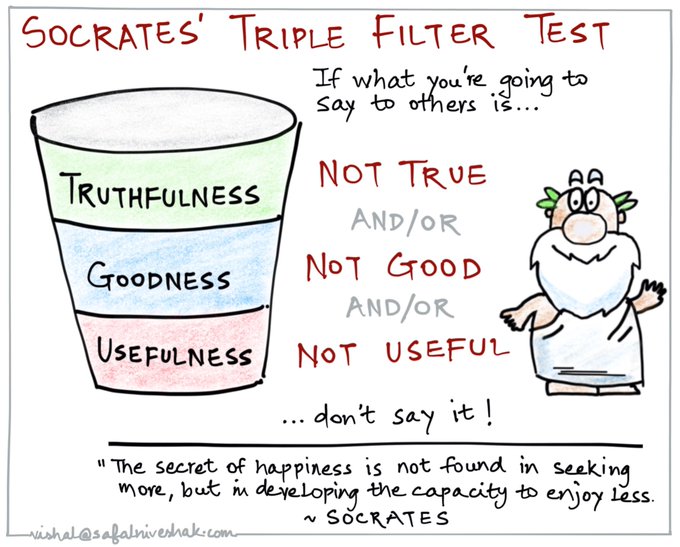
- Is it TRUE?
- Is it GOOD?
- Is it USEFUL?
If what you want to share is not true, not good, and not useful — why say it at all?
Nehemiah’s Secret Strength
After replying, Nehemiah immediately prayed,
“But now, strengthen my hands.” (v. 9)
Vintage Nehemiah—shot-arrow prayers.
Because without God’s strength, slander is hard to survive.
Conclusion
Slander is the enemy’s second weapon after distraction.
If he cannot pull you away through Ono, he will try to break you through accusation.
When your motives are twisted and your intentions questioned, remember Nehemiah.
Stand firm. Speak the truth simply. Pray for strength. And keep building.
Because the enemy wants your hands to drop—but God strengthens the hands that serve Him.

Please Rate and give a comment
 Ennathinks
Leave a comment